
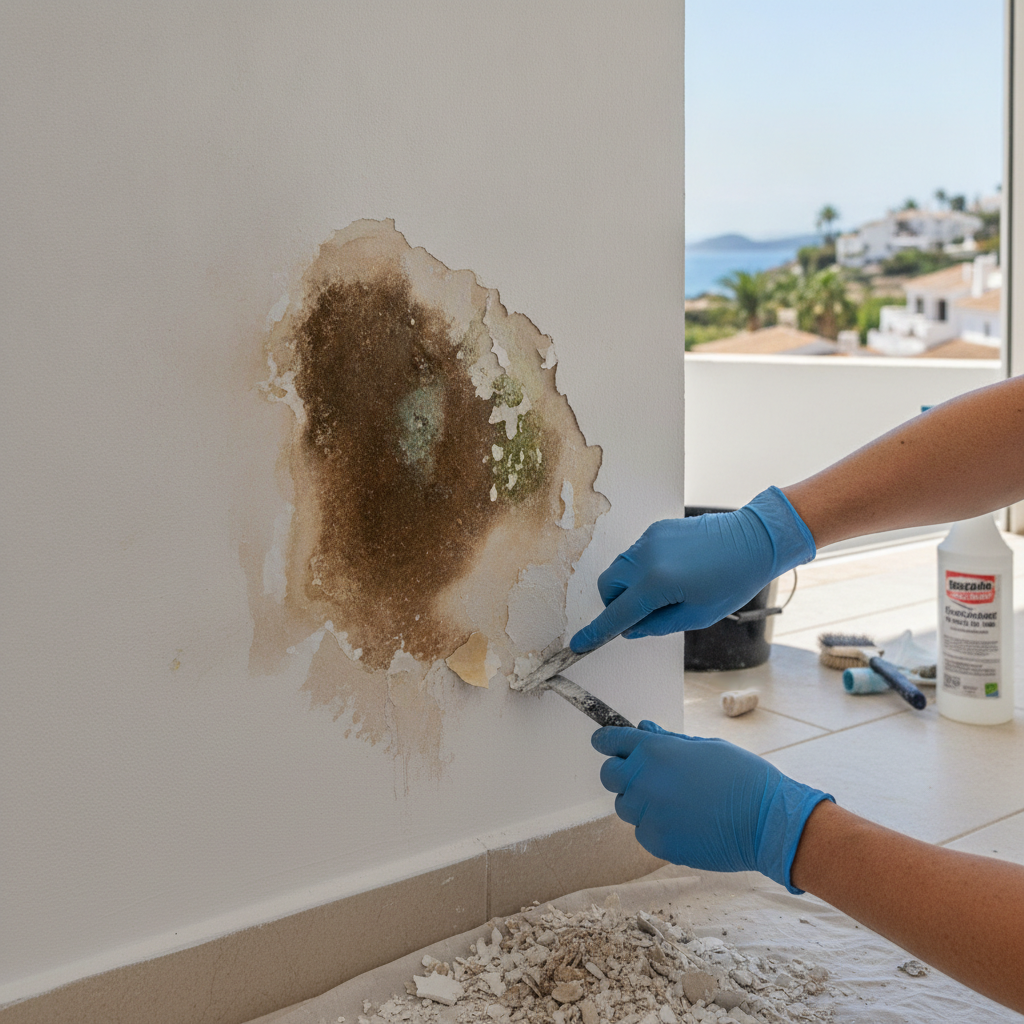
Living on the Costa del Sol offers an unparalleled lifestyle, with its stunning Mediterranean views and year-round sunshine. However, for homeowners in Mijas, the proximity to the sea and the unique microclimate of the Sierra de Mijas foothills bring a specific challenge: high levels of humidity. Whether you own a traditional white-washed villa in Mijas Pueblo or a modern apartment in La Cala de Mijas, dampness can wreak havoc on your interior and exterior walls. At Pintores Pro, we know that the secret to a flawless and long-lasting finish lies not in the paint itself, but in the preparation. In this guide, we will explore the professional techniques on how to remove persistent damp stains before painting in Mijas.
The Costa del Sol is known for its humidity, which often fluctuates between 60% and 80%. This moisture often finds its way into the porous materials used in Spanish construction, such as brick and plaster. Before you even pick up a brush, you must understand that painting over a damp stain is a temporary fix that will inevitably lead to peeling paint, bubbling, and the growth of hazardous mold. Identifying the type of damp is the first step. Is it condensation from poor ventilation? Is it rising damp from the ground? Or is it penetrating damp from a hairline crack in the facade? For residents of Mijas, these are common issues that require specific solutions before any aesthetic improvements can be made.
There is no point in learning how to remove persistent damp stains before painting in Mijas if the source of the water is still active. If the stain is near a window frame, check the sealant. If it is high on a wall, there may be a leak in the roof tiles or a blocked gutter. In many Mijas villas, "capillarity" or rising damp is a frequent culprit, where moisture rises from the earth through the walls. Before cleaning the stain, ensure the structural issue is fixed. This might involve resealing windows, repairing terrace waterproofing, or applying a damp-proof membrane. Without fixing the root cause, the stain will return within months, regardless of the quality of the paint used.
Once the source is sealed, the visible stain must be treated. Persistent damp often carries fungal spores. To properly clean the area, you should use a specialized anti-mould solution or a mixture of water and bleach (in a 3:1 ratio). Scrub the area thoroughly to kill the spores deep within the plaster. It is vital to let the wall dry completely after cleaning. In the humid climate of Mijas, this may take longer than expected. Using industrial dehumidifiers can speed up this process, ensuring that no moisture is trapped behind the new layer of paint. For more technical information on the health impacts of damp and mold, you can consult the World Health Organization guidelines on indoor air quality.
In coastal areas like Mijas Costa, damp stains are often accompanied by a white, powdery substance known as efflorescence. This is caused by salt deposits left behind when water evaporates. Painting over these salts is a recipe for disaster, as they will push the paint off the wall. Use a stiff dry brush to remove as much of the powder as possible. If the salts are persistent, a specific saltpetre treatment acid may be required. This neutralizes the alkaline nature of the masonry, creating a stable surface for the primer to bond to.
Once the wall is clean, dry, and free of salts, it is time to apply a "blocker." A standard primer is not enough for persistent damp stains. You need an anti-damp or stain-blocking primer designed to seal the affected area. These products create an impermeable barrier that prevents any residual staining from bleeding through the topcoat of paint. At Pintores Pro, we recommend using oil-based or specialized resin-based sealants for the most stubborn marks. Apply the primer slightly beyond the edges of the original stain to ensure total coverage and prevent "halo" effects after the final painting.
After successfully learning how to remove persistent damp stains before painting in Mijas and preparing the surface, the final choice of paint is crucial. For the exterior of Mijas villas, we recommend "pitted" or high-quality acrylic paints with breathable properties (often referred to as "cal" or silicate paints in traditional contexts). These allow the building to "breathe," letting internal moisture escape without damaging the exterior finish. For interiors, anti-condensation paints containing microspheres can help keep the wall surface warmer, reducing the likelihood of future dampness caused by condensation.
While DIY methods can work for minor spots, persistent damp in a coastal environment often requires professional intervention. At Pintores Pro, we have years of experience dealing with the specific climatic challenges of the Costa del Sol. We don't just cover up stains; we provide a comprehensive diagnostic and treatment service to ensure your home remains beautiful and healthy. Our team uses professional-grade moisture meters to verify that walls are dry before we ever open a tin of paint, guaranteeing a finish that lasts for years despite the Mediterranean humidity.
If you are struggling with stubborn marks and need to know how to remove persistent damp stains before painting in Mijas, let the experts handle it. We serve Mijas Pueblo, Mijas Costa, Las Lagunas, and the surrounding areas with premium painting and decoration services tailored to the Spanish coast.
Removing damp stains is a meticulous process that requires patience and the right materials. By identifying the source, cleaning the area thoroughly, neutralizing salts, and using professional-grade blockers, you can protect your investment and enjoy a pristine home. Remember, in Mijas, the battle against humidity is constant, but with the right preparation and the help of Pintores Pro, your walls can stay vibrant and stain-free for a very long time.

 Español
 English
 Русский