
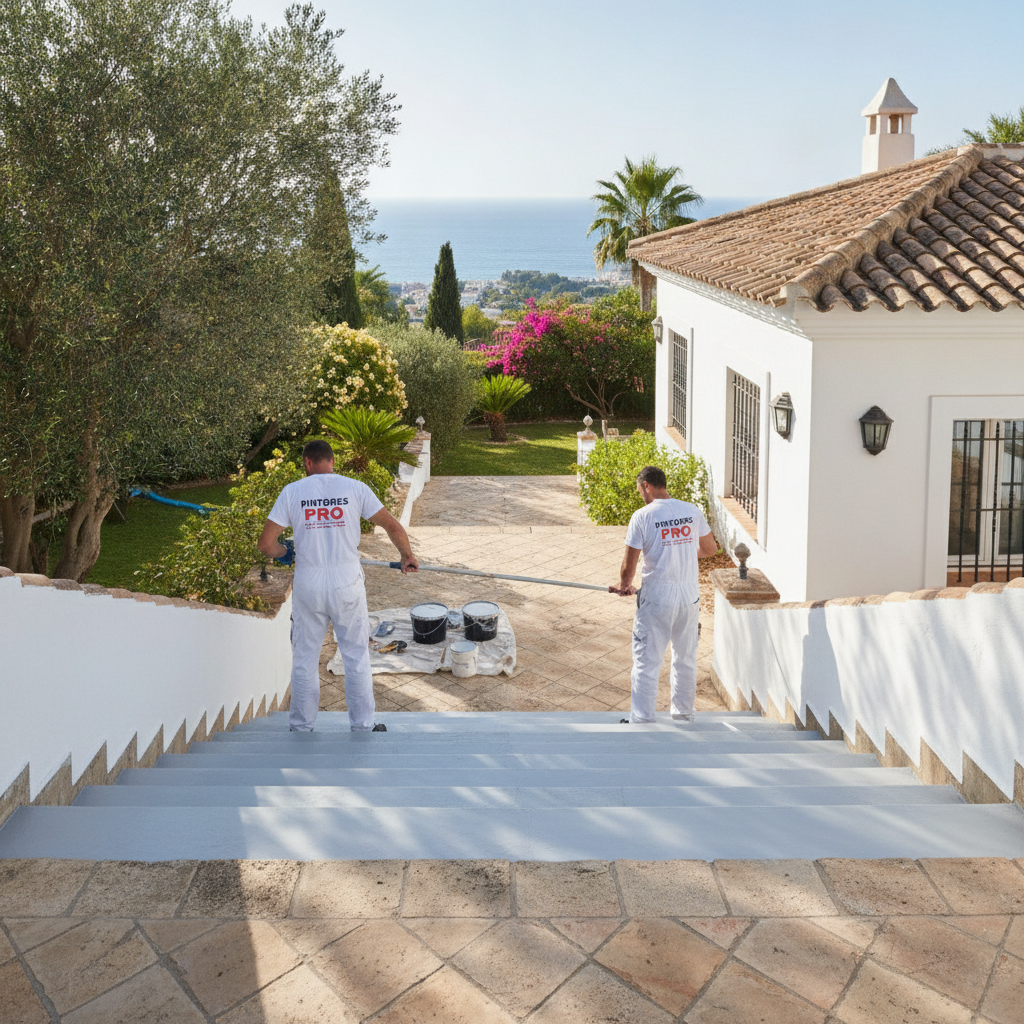
The exterior of a villa in Estepona is its first impression. Nestled along the beautiful Costa del Sol, these homes often feature stunning masonry, including grand staircases made of stone or concrete. However, the intense Mediterranean sun, high humidity, and salty sea air can take a toll on these surfaces. Over time, stairs can become faded, cracked, or stained, detracting from the property’s overall appeal.
At Pintores Pro, we specialize in revitalizing coastal properties. One of the most frequent questions we receive from homeowners is how to paint exterior stone or concrete stairs in villas in Estepona to ensure a finish that is both beautiful and durable. In this guide, we will walk you through the professional process of restoring your outdoor steps, ensuring they withstand the unique climate of the Costa del Sol.
Before picking up a brush, a thorough inspection is mandatory. Concrete and stone are porous materials, and in Estepona’s coastal environment, they can trap moisture and salt. Start by checking for structural cracks or loose masonry. If the stairs are made of natural stone, identify if they have been previously sealed, as this will affect how the new paint adheres.
Cleaning is the most critical part of the preparation. Use a pressure washer to remove dirt, moss, algae, and any peeling paint. For stubborn stains or salt efflorescence (that white powdery substance often seen on Mediterranean walls), a specialized masonry cleaner may be required. The surface must be completely dry before proceeding; even a small amount of trapped moisture can cause the paint to bubble or peel within months.
When considering how to paint exterior stone or concrete stairs in villas in Estepona, the choice of product is paramount. You cannot use standard wall paint for floor surfaces that experience foot traffic and extreme UV exposure. You need a high-quality masonry paint or a specialized concrete floor enamel.
For villas in this region, we recommend paints with high UV resistance to prevent color fading. Additionally, safety is a priority. Exterior stairs can become incredibly slippery when wet or near a pool area. We always advise incorporating an anti-slip additive into the final coat of paint. This fine grit provides the necessary traction without compromising the aesthetic finish. For technical specifications on the types of resins used in these paints, you can consult resources like the Concrete Network to understand how different coatings interact with masonry surfaces.
Concrete and stone are naturally alkaline, which can react with certain paints and lead to premature failure. A high-quality masonry primer acts as a bridge between the raw stone or concrete and the decorative topcoat. It seals the pores, prevents "dusting," and ensures the paint sticks firmly to the surface.
In Estepona, where the temperature can rise significantly during the day, it is best to apply primer in the early morning when the surface is cool. Applying primer to a hot surface can cause it to dry too quickly, preventing it from soaking into the pores correctly. At Pintores Pro, we ensure the primer is compatible with the specific porosity of the stone or the age of the concrete found in local Estepona villas.
Once the primer is dry, it is time to apply the paint. For the best results, use a long-nap roller for textured stone and a medium-nap roller for smooth concrete. Begin at the top of the staircase and work your way down to avoid stepping on freshly painted areas. Apply the paint in thin, even coats.
Two coats are usually the minimum required for a professional finish. The first coat provides the color base, while the second coat provides the protective shield and uniform appearance. If you are using an anti-slip additive, it should be mixed into the final coat according to the manufacturer's instructions. Ensure you allow the recommended drying time between coats, which in the humid air of the Costa del Sol, may be longer than what is listed on the tin.
Knowing how to paint exterior stone or concrete stairs in villas in Estepona is only half the battle; maintaining them is the other. The proximity to the sea means salt will constantly settle on the surface. We recommend rinsing your painted stairs with fresh water occasionally to prevent salt buildup, which can act as an abrasive underfoot.
Avoid using harsh chemical cleaners or wire brushes, as these can damage the protective paint film. A simple soft-bristle broom and mild detergent are usually enough to keep the stairs looking brand new. Depending on the level of foot traffic, a fresh "refresh" coat every few years will keep your villa looking its best and protect the underlying structure from the elements.
While painting stairs might seem like a straightforward DIY project, the technical challenges of the Estepona climate often lead to DIY failures. Incorrect product selection or poor surface preparation can result in paint that peels off within a single season. Hiring professional painters ensures that the job is done right the first time with industrial-grade materials.
Pintores Pro has years of experience working with the specific materials used in Costa del Sol architecture. We understand the nuances of local stone and the requirements for high-traffic exterior surfaces. Whether you are looking to refresh a classic Mediterranean villa or a modern apartment complex, our team provides the expertise needed to transform your exterior stairs into a durable, safe, and beautiful feature of your home.
If you are ready to upgrade your property, contact Pintores Pro today for a professional consultation. We specialize in high-end finishes that stand the test of time, even in the demanding coastal environment of Estepona.

 Español
 English
 Русский